
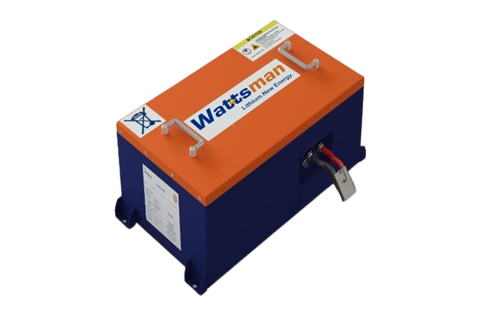
EM LFP S 51105 G
- Capacity: 105 Ah
- Warranty: 36 Months
- Charger Rating: 51.2V-21/25A
- Application: E-Rickshaw
Features

Thermal
Balancing

Anti Theft
Protection

High Current
Sustainability

Multilayer
Protection

Non-Controlled
Charging Protection

Robust Design
and Water Splash
Proof

Bluetooth
Connectivity
Technical Specifications
| Sr. No. | Application | E-Rickshaw |
|---|---|---|
| 1 | Battery Voltage(V) | 51.2 |
| 2 | Battery capacity(AH) | 105 |
| 3 | Battery operating Voltage | 42~58.4 |
| 4 | IP Rating | IP67 |
| 5 | Battery Enclosure | GI |
| 6 | Operating Temp Range | 0°C~60°C |
| 7 | Recommended working Temp Range | 10°C~45°C |
| 8 | Recommended Discharge Current(A) | 30~35 |
| 9 | Peak Discharge Current(A)-10 Sec | 65 |
| 10 | Battery Weight(Kg)* | 58* |
| 11 | Maximum Motor Power(KW) | 1.2 kW |
| 12 | Pay load | 450 Kgs |
| 13 | DOD Percentage | 95% |
| 14 | Warranty | 3 Years |
| 15 | Cell Configuration | 16S 1P |
| 16 | Battery Dimension(mm) ±2 mm | 600*325*225 |
| 17 | BMS Type | Smart |
| 18 | Charge & Discharge separate port | No |
| 19 | Controller/Power Train Rating | 1.2 kW |
| 20 | Charging Coupler Type | SBS75X |
| 21 | Discharging Coupler Type | SBS75X |
| 22 | Pack Over Voltage protection | Available |
| 23 | Pack Under Voltage protection | Available |
| 24 | Cell Over Voltage protection | Available |
| 25 | Cell Under Voltage protection | Available |
| 26 | Over Charge Current Protection | Available |
| 27 | Over Discharge Current Protection | Available |
| 28 | Temperature protection | Available |
| 29 | Short Circuit Protection | Available |
| 30 | GPS | On Customer Demand |
| 31 | Cell Balancing | Passive |
| 32 | Communication Protocol | CAN |
| 33 | Charger Rating | 21/25A |
| 34 | CAN enabled charging | Yes |
| 35 | Application Standard | AIS156-A3 (Phase-II) |


Download Catalogue
Interested in buying
our products?
Fill the enquiry form or call us on:
 78728 78728
Enquiry Form
FAQs
For e-rickshaws, the best battery depends on factors like capacity and durability. Typically, lithium-ion batteries offer high performance and longevity for these vehicles. Opt for Wattsman Lithium Ion Batteries for e rickshaws that come with a 3 year warranty and are back by the industry first buyback policy for Lithium Ion Batteries.
Charging time for a lithium-ion battery in an e-rickshaw varies but generally takes around 4-6 hours for a full charge.
The best lithium-ion battery for electric vehicles depends on factors such as energy density, longevity, and safety features, with options available from various reputable manufacturers. With Wattsman, you get lithium-ion batteries certified as per AIS156-A3 (Phase-II), guaranteeing utmost safety along with some of the highest warranties in lithium-ion batteries, ranging from 3 years to 5 years. You also get complete peace of mind through our buyback policy that lets you return your old Wattsman battery for cash.
The life of a lithium EV battery varies but is typically around 8-10 years, influenced by factors like usage patterns and maintenance.
Lithium-ion batteries excel due to their high energy density, longer lifespan, faster charging capabilities, and lighter weight compared to other battery types.
For electric three-wheelers, high-performance lithium-ion batteries from reputable manufacturers offer reliability, longevity, and optimal energy storage capabilities. Wattsman, being one of the biggest names in this segment, provides lithium-ion batteries for every requirement. We even have customized solutions for your very specific needs. Carrying the same trust and expertise established by our parent company, Eastman Auto & Power Limited, we are at the forefront of introducing the future of energy storage for electric rickshaws and three-wheelers.
Lithium iron phosphate (LiFePO4) batteries are considered one of the safest types due to their stable chemistry and resistance to thermal runaway. However, recent developments in Li-Ion technology have made tremendous leaps in ensuring the safety of these batteries. Wattsman's lithium-ion batteries pass some of the most stringent quality and safety checks and are certified as per AIS156-A3 (Phase-II), guaranteeing complete safety.
Lithium-ion batteries are widely used in various applications, including electric vehicles, consumer electronics, renewable energy storage systems, and medical devices, due to their high energy density and rechargeability.